





“Taking on the
U.S. Housing Market as a Group”
Group procurement in the U.S. was not going smoothly, and in the wake of numerous obstacles, an air of resignation had settled in. The pivot point was discovered in the synergies that arose from the efforts of talented individuals who had a firm grasp of on-the-ground operations and practical matters.







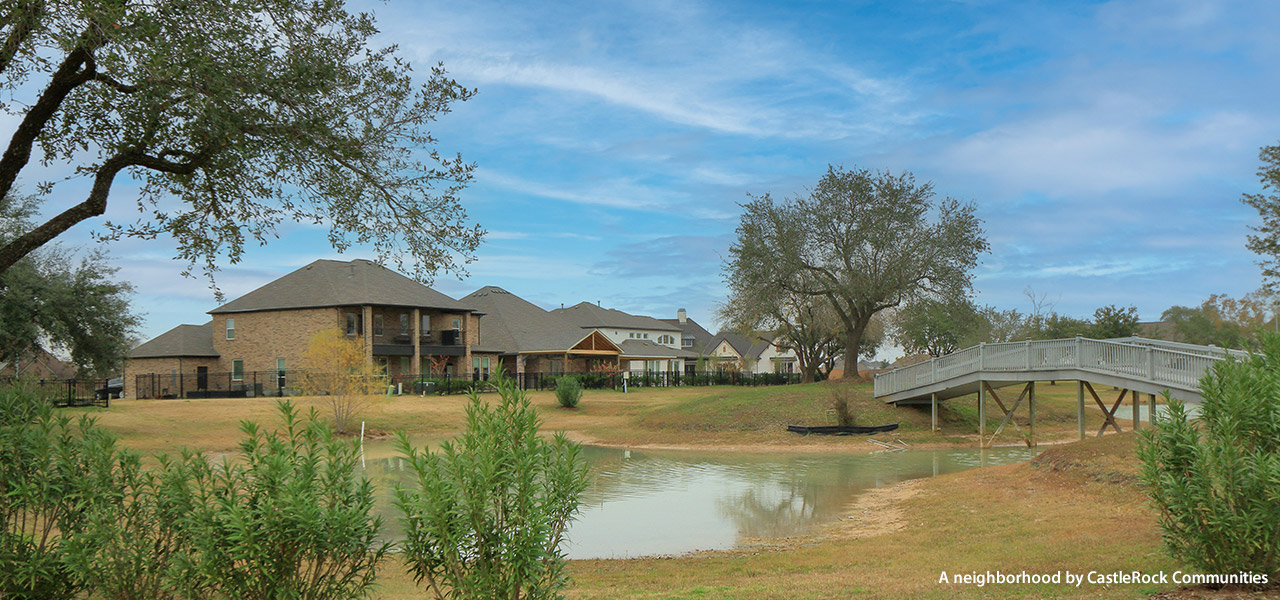

Setting up group procurement in the U.S.

Seven decades since our founding, Daiwa House Group helped shape communities across Japan through an array of businesses. Such efforts have crossed oceans and spread to the world.
It was the 1960s, our founding era, when we took our first steps outside of Japan. Today in 2026, we have expanded our business presence to 26 countries and regions around the world, from Asia to Europe and Africa, Central and South America. Our overseas companies account for roughly 20% of the Group’s total sales of 5.6 trillion yen and about 70% of its just over 690 Group companies.
Among these, in the U.S., we have expanded to conduct housing development, construction and sales businesses carried out by three local builder subsidiaries in what we call the “smile zone.” The US Single-Family Houses Business is becoming the engine that will drive the future of our overseas businesses.
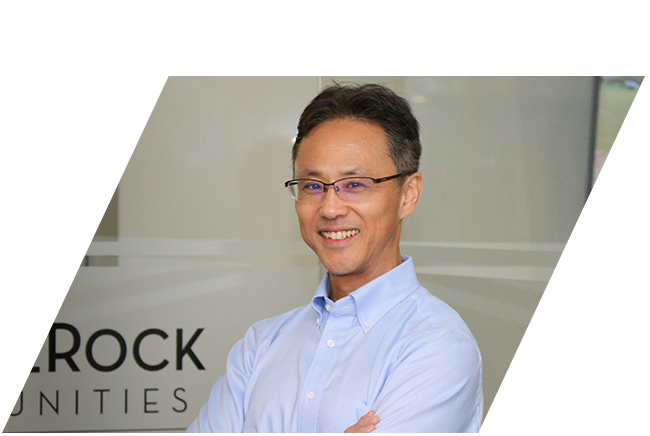
However, figures that would appear to represent favorable progress are, in the end, merely the resulting numbers. The challenges we face include differences in language and business customs, difficulties in earning trust on the ground, and issues with M&As that transcend borders. Standing at the forefront of efforts to overcome such hurdles is Hiro who is based at CastleRock, one of the three local companies.
Hiro’s first overseas posting was in Asia, and it was there that a question posed to him is something he keenly remembers. “I was making a visit to request a business deal, and when I said, ‘I’m from Daiwa House,’ I was asked, ‘Is that a fishing tackle store?’” In Japan, everyone knows the company’s name, but in Asia it drew a complete blank. In that Asian country, without exception, there were no companies that would hear out an appeal or request from a company like Daiwa House Industry that at the time lacked name recognition. Similarly, activities in the US also began by battling against headwinds.
The three companies in the U.S. engaged in the Single-Family Houses Business are, in order of joining the Group from 2017, Stanley Martin Holdings in the east t, Trumark Companies on the west coast, and CastleRock Communities in the south.
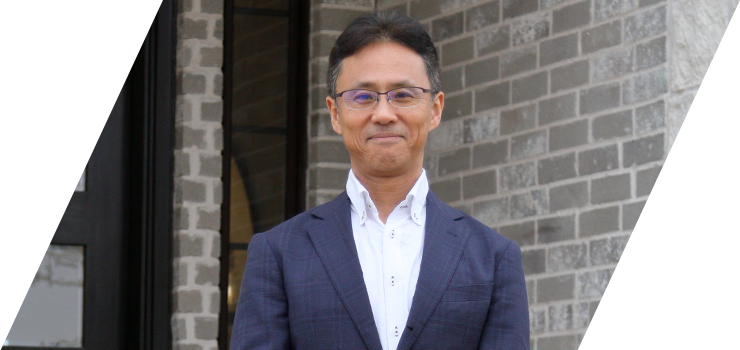
At the time, Hiro had returned to Japan from Asia, and was serving in the Overseas Strategy Office. How should the company proceed with collaboration between the Head Office in Japan and the Group companies in the U.S.? Having held a number of meetings between the U.S. and Japan, we hammered out a strategy and procedures for putting it into place. One of those was “group procurement,” an initiative whereby the three companies would procure materials jointly. That was when Hiro left Japan, relocated to the U.S., and began building synergies on the ground.
Still, an air of stagnation hung over the local businesses. “Group procurement is not working out. Let’s stop spending time on this.” The three companies had their own respective ways of doing things and relationships with their partner vendors that they had cultivated over the years. The reality was that things would not move forward based merely on the concept of “let’s collaborate as a group.”
However, Hiro came to the U.S. to realize group procurement, so giving up was not an option. “Please, give me just one year.” Behind that plea lay a determination to never let go of the feeling he had felt that day when he voluntarily raised his hand, saying “I want to work overseas.”

A model home exudes a sense of grandeur
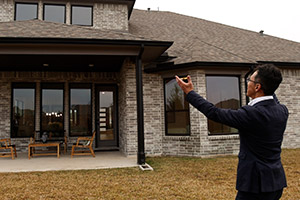
Roofing is one of the materials covered under the Group Procurement initiative.

Currently, fireplaces, air conditioners, and other items are also included in Group Procurement
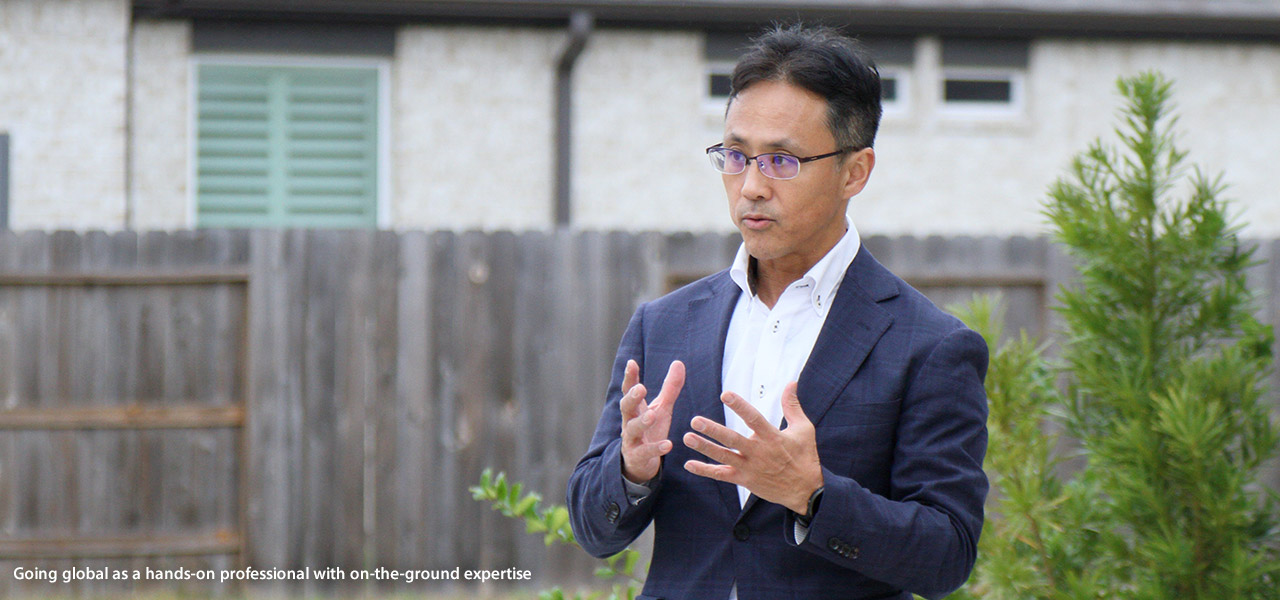
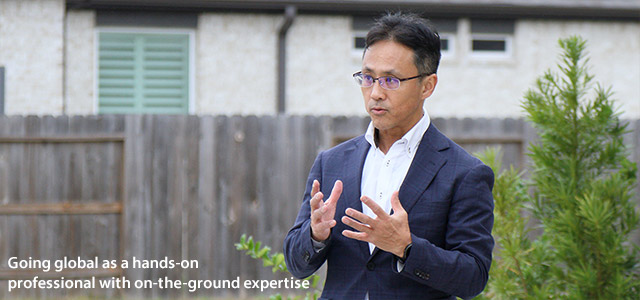

A technical expert with
on-site experience expands overseas
From the time he joined Daiwa House Industry until he was in his mid-30s, Hiro served in technical positions for the construction management of single-family homes and Multifamily homes. While actively pursuing operational efficiency and enhancements, he was at heart the type of employee who reliably performed the duties required of him.
What changed Hiros’ professional path was a lecture he attended at the invitation of a customer. Listening to that talk about rethinking the mindset one brings to work, and life planted a small seed of change within his heart. Hiro knew he would need to pursue his personal potential and tackle challenges more aggressively. Given this revelation, he embarked on a course of self-learning that would expand his horizons. He began to think about how he would live his life going forward.
Hiro took pride in his work managing construction. However, he could also image himself ten or twenty years in the future moving along on the same, unchanged trajectory that currently extended before him. “Rather than that,” he explained of the powerful conviction that had swept over him, “I want to do a job where I can’t imagine myself decades into the future. I want to enter a field that offers a greater range of possibilities.”
It was about this time when Hiro came upon an internal company notice seeking volunteers for overseas postings. With the thought of, “I want to work overseas,” he had found a new goal. To ensure he could contribute across any function if he returned to Japan, Hiro obtained three national certifications in architecture, construction management, and civil engineering. This enabled him to develop a comprehensive understanding of the entire construction process, from site development and design to execution. In doing so, he built a foundation that gave him a bird’s-eye view of the entire construction process, from site development and design to construction.
With his preparations in place, Hiro was given a rare opportunity to apply for a role supporting the housing business in Asia. In the waiting room before the interview, he found himself surrounded by colleagues who had studied abroad or grown up overseas, all fluent in English. By contrast, Hiro could not speak English at all at the time. “I don’t stand a chance,” he thought.
Still, in the interview, Hiro spoke candidly about his determination. “Even if I don’t get this opportunity, I will try again.” Only two candidates were selected, and Hiro was one of them, going on to take up an assignment in Asia.
Hiro arrived in Asia full of optimism but quickly ran into challenges. He realized that simply applying Japanese methods would not move his counterparts. Even when he spoke about what he considered “standard” quality and process management, it would not resonate if the other party was unfamiliar with those concepts. Instead of relying solely on words, he began using simple diagrams and sketches to visualize his ideas. This approach helped others understand him, even when his English was imperfect. As tangible results followed, trust gradually built. This hands-on, visual approach later became a key driver in bringing the three U.S. companies together under Group Procurement.

Hiro is currently based in Houston, Texas, U.S.

Based in Houston, the largest city in Texas

The vibrant energy of downtown Houston
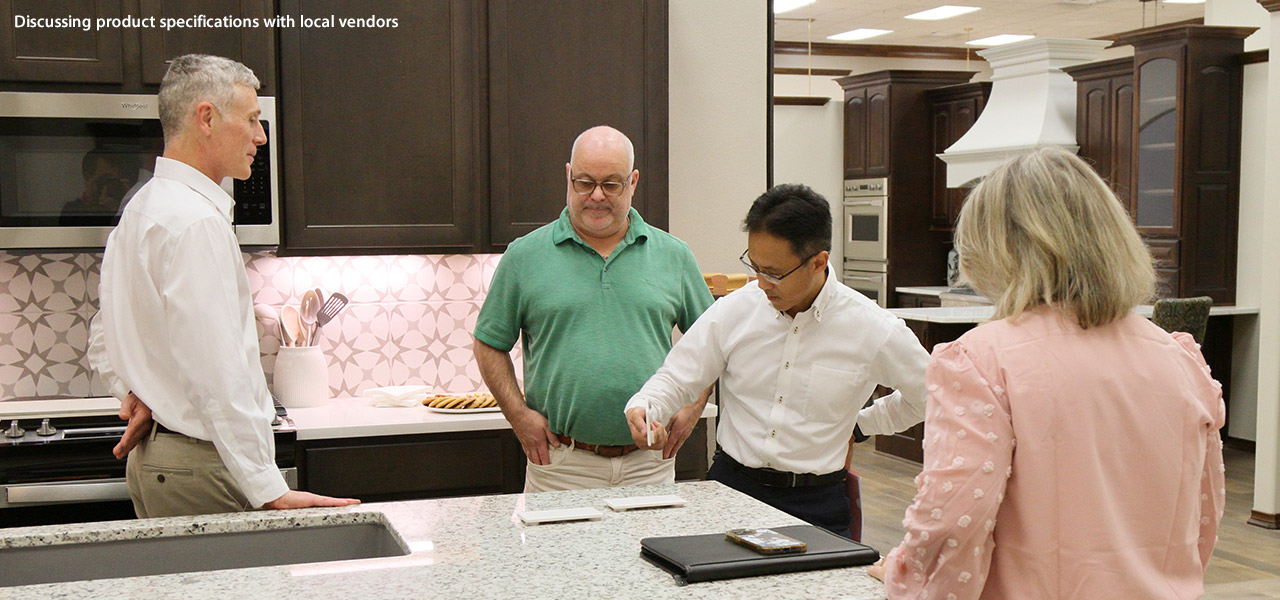

Visualization eliminates confusion for all
After his time in Asia, Hiro was assigned to the U.S., where momentum for Group Procurement was beginning to fade. Together with Tuffy, a Japanese expatriate at Stanley Martin, he persistently asked for one more year—and secured the time they needed.
The first step was to understand why the three companies believed that Group Procurement was not working. The U.S. is a vast country, with a land area roughly 26 times that of Japan. To reduce the burden of long-distance transportation, major vendors have established regionally based supply networks. As a result, each of the three companies prioritized materials that were readily available in their respective regions.
Supply chain disruptions caused by the pandemic were still lingering. Concerns remained strong: “What if we face shortages or price increases after consolidating vendors?” There was also a clear desire to maintain stable relationships with local vendors they had built over time.
Even so, Hiro was convinced that Group Procurement was the key to success. “The more you buy, the more leverage you gain—and the lower the cost. That holds true in both Japan and the U.S.” By consolidating volume, companies strengthen their negotiating power and secure better terms. “If we are going to expand in the U.S., there is no reason not to pursue Group Procurement.”
To gain buy-in from the three companies, it was essential to visualize both the current state and the expected benefits of implementation. Hiro began organizing vendor data across the three companies. With some subsidiaries having only recently joined the Group, the information was not readily available.
At Daiwa House Group, the first few years after an acquisition are treated as a post-merger integration (PMI) period, during which priority is placed on aligning corporate culture, with limited direct intervention in management. It took more than six months to consolidate all the data.
At a meeting of the three companies’ procurement leaders, Hiro presented a visual breakdown of overlapping vendors, along with diagrams illustrating organizational relationships and process flows. “If we approach vendors as a group, we can secure better terms,” he explained.
Once the issues were clearly laid out and the potential impact became visible, decisions came quickly. “If it makes sense, we’re in.” “We’ll take the lead in negotiating with the vendor.” The long-stagnant atmosphere finally began to shift.
Momentum also began to build. With support from Mike, VP of Procurement at Stanley Martin, Hiro and his counterparts from Trumark and CastleRock were invited to a supply Chain Event hosted by Stanley Martin, attended by around 100 vendors. There, he announced, “We will be advancing Group Procurement,” quickly raising awareness across the group.
The three companies also attended IBS (NAHB International Builders’ Show®), one of North America’s largest residential construction trade shows, visiting dozens of vendor booths and negotiating group purchasing agreements.
The initial one-year grace period soon passed, giving way to the second and third years, as the number of vendors participating in Group Procurement steadily grew. What began as a concept gradually took shape as synergies were realized through collaboration.

The office building that houses CastleRock Communities
Though his English was limited, Hiro got by with a smile and determination.
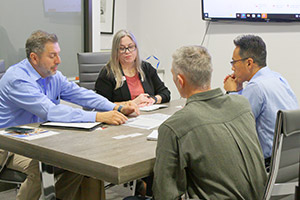
Engaging in ongoing discussions with vendors
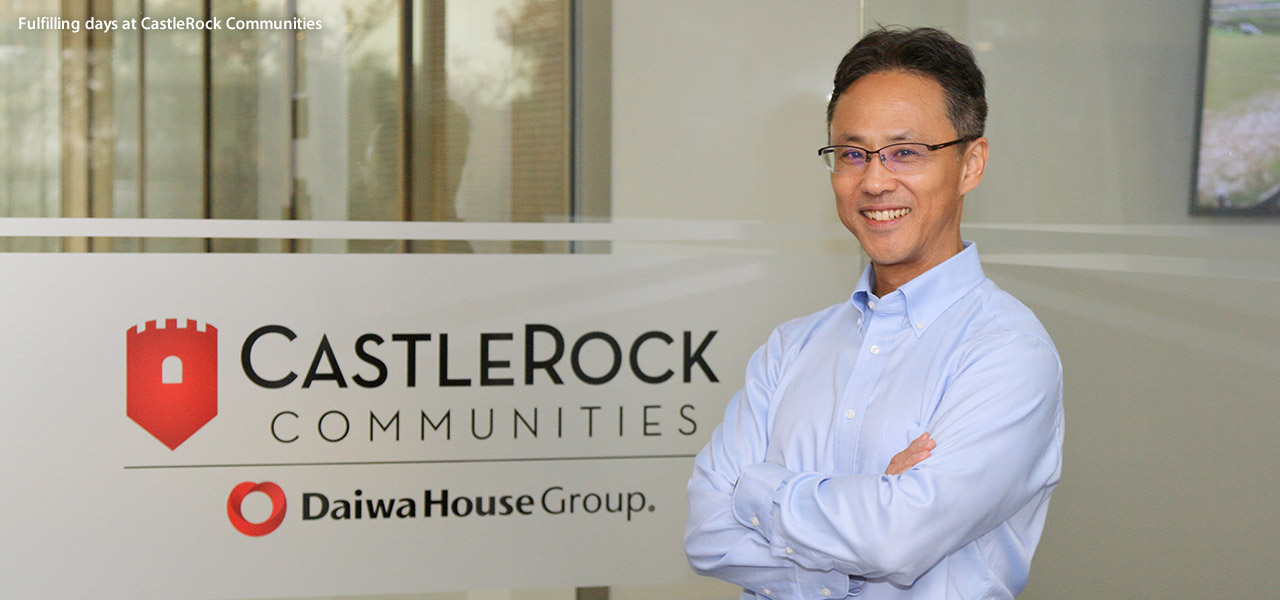
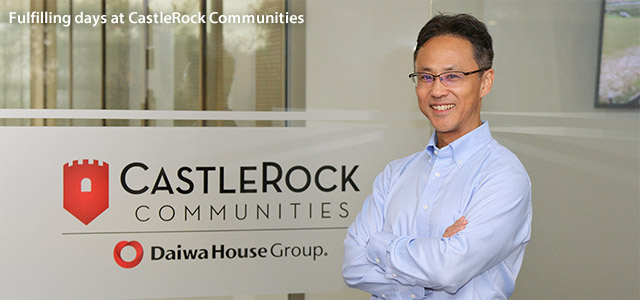

Building a framework of trust
From time to time, Hiro is asked by peers in Japan, “How did Daiwa House make Group Procurement work?” With a wry smile, he replies, “Success? It often feels like we’re failing more than succeeding.”
If there is a difference, it may lie in Daiwa House’s deep understanding of both technology and operations. Each subsidiary has professionals on the ground who are well-versed in field operations and technical practices. With people who understand the full process—from procurement and logistics to design and construction—they are able to develop approaches from a perspective distinct from that of investment-focused firms or trading companies.
he role of Japanese expatriates such as Hiro and Ueda was to create an environment where local employees and expatriates could learn from each other and engage in open, aligned discussions. They supported a structure that enabled each region to make independent decisions and act autonomously, while respecting on-the-ground realities, maintaining a sense of urgency, and embracing local cultures.
Above all, Group Procurement worked because the three locally rooted companies took the lead and acted independently. With a shared framework and common understanding in place, the initiative gained traction as local teams drove its execution.
As Group Procurement contracts began to grow, Hiro shared the progress with his team. Soon after, a member of the Stanley Martin procurement team sent him an email: “Nice work—that’s the result of all your hard work.”
Hiro fought back tears. Since arriving in the U.S., he had kept pushing forward without clear answers or visible success, often feeling overwhelmed by the pressure. But someone had been watching. It was with the support of those around him that he had made it this far.
Hiro was also supported by Alan, his respected supervisor at CastleRock Communities. Alan is demanding of himself, disciplined, and relentlessly focused on maximizing results. His network is so extensive that it feels as though he knows every vendor in the country.
In the U.S., changing jobs is common, and personal networks often shape future opportunities and conditions. This is why building relationships is highly valued—yet at the same time, results are expected, and decisions can be made quickly if performance falls short.
From Alan, who embodies both the rigor and the human side of business in the U.S., Hiro continues to learn what it takes to succeed.
In the U.S., Hiro goes by “Hiro,” a shortened version of his first name, Hiroyuki. Alan recalls, “When I heard Hiro would be joining the team, I was excited to see how he would influence my decision-making at CastleRock Communities.”
He continued, “Honestly, at first, I wasn’t sure how he would contribute. But it quickly became clear that he is exceptionally strong in analysis and benchmarking. He helped quantify cost savings across various programs and agreements. In vendor negotiations, he knows exactly what questions to ask—and when to ask them. We learn a great deal from each other, and I look forward to working with him for many years to come.”
Time away from work is just as important. On their days off, Hiro enjoys jogging and road cycling with Alan, and occasionally attends Major League Baseball games. He also spends time with fellow Japanese expatriates from group companies, gathering for activities such as barbecues and strengthening relationships outside of work.
Looking back, when Hiro decided to pursue an overseas opportunity, those around him cautioned, “You’re an engineer—maybe you shouldn’t.” Still, he believed in himself and took the leap, which has led him to where he is today. The same was true for Group Procurement.
It was his belief in its potential that ultimately brought people together—local teams, vendors, and Japanese expatriates—creating a shared sense of purpose and a foundation of trust that allowed them to move forward as one.
Hiro has already set his sights on what comes next. To expand opportunities for Japanese employees to work overseas, he and his colleagues abroad are committed to delivering results.
Looking ahead, they aim to bring together expertise not only in technology and procurement, but also in areas such as BIM, software, and sustainability—unlocking even greater synergies. Daiwa House Industry has the potential to become an even more global organization.
He also places high expectations on younger employees. If you have an interest in working overseas, he encourages you to take the step—even if you feel uncertain.
Those who understand both the strengths and the limitations of Japan and overseas are stronger for it. That perspective is what connects people with people, and companies with companies.
“Now, take a step forward.” That’s the founder’s spirit that we should emulate—to step forward fearlessly, just as the founder did. Paths become clear only for those who take action.
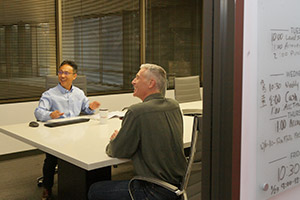
Learning from a respected leader every day
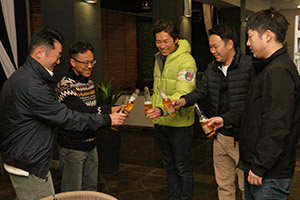
Taking a break at a barbecue with fellow Japanese expatriates
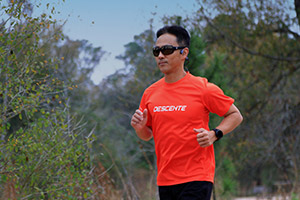
Continuing to move forward
*Stated information is as of March 2026.