




“Bringing determined
design to rental housing”
Daiwa House Industry is building a brand of rental housing that people will choose for its design. Now, a new culture of design is emerging from the “Residence Design Office,” our unit in charge of high-end design.








Being a person who makes their choice
based on a name

Why do you draw this line? Or why don’t you draw it?
The Residence Design Office was recently the scene of a gathering of top apartment residence designers, and on that day, they conducted a design review. On perspective drawings and floor plans created by a certain person, the other designers would add their own sketches, conveying their ideas by saying, “I’d do it this way if it were me.” Even though these drawings were made by Yuki Hasegawa, the office’s leader, they were ruthlessly redrawn with pens.
Ultimately, though, the decision to adopt such ideas was left to him. No one would bother to follow up on how it turned out after the review. That would be a building synonymous with the designer’s intention and name. Taking that into account, what Hasegawa aims for is to build a reputation that has people choosing him by name, just like with custom-built homes, where they say, “I want him to do the design.”
This also aligns with the challenges faced by “D-ROOM,” the rental housing brand of the Daiwa House Group. D-ROOM is held in high esteem based on tenant surveys, and despite our confidence in its quality, few people say “I want to live in D-ROOM.” Nonetheless, before getting to know the inside, what they see first is the outside. If they have a good first impression, people will likely take an interest in the design philosophy and lifestyle beyond that.
“D-ROOM” is currently undergoing a transformation with the goal of becoming a brand that continues to be chosen. The Residence Design Office, which was established around the same time as this development, engages in high-end rental housing projects, primarily in the Tokyo metropolitan area.
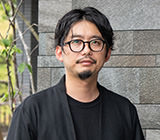
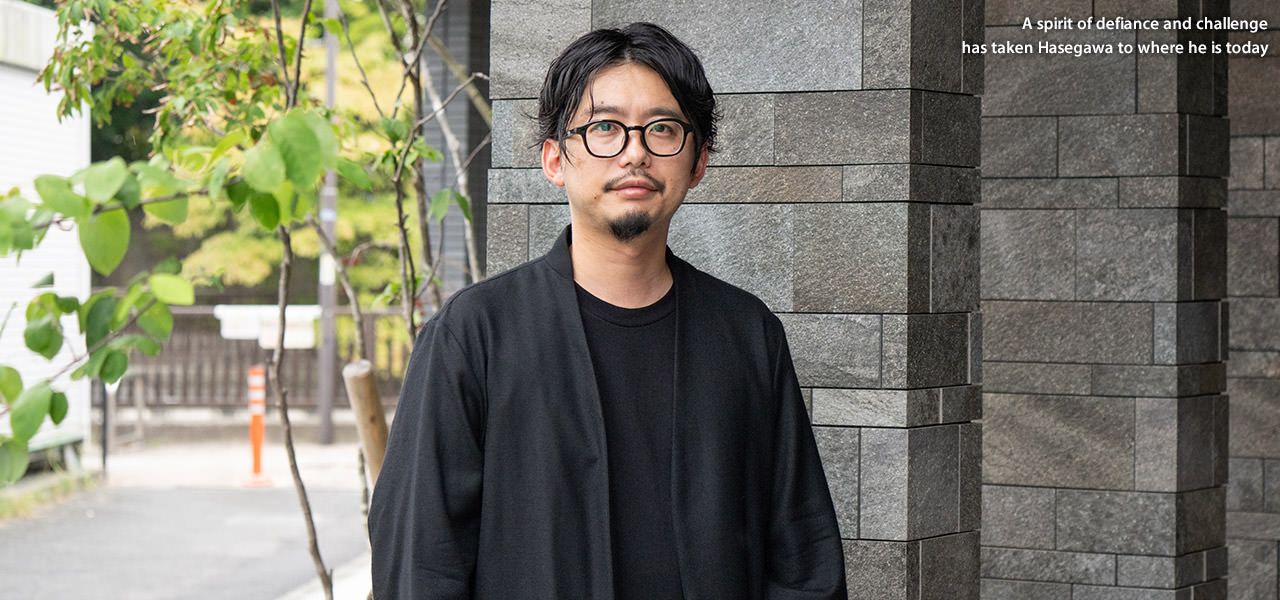
Hasegawa was appointed head of the office in his 30s. Based in Hiroshima until recently, this maverick, while specializing in apartment design, has also designed single-family houses, nursing care facilities, dormitories, and mid- to high-rise buildings. Not bound by organizational precedents, he constantly pushes back on things he believes don’t make sense while striving to gain people’s understanding. Highly trusted by his clients, even today he receives requests from Hiroshima that mention him by name.
One of the founding members of the Residence Design Office is Nishimoto, its chief designer who has been recognized with more than a few internal awards and is widely regarded as “the man to watch in Eastern Japan.” For Hasegawa, Nishimoto is a worthy “adversary” to consult with about design and organizational development. Nishimoto thinks along those lines as well, saying, “As a fellow architect, I naturally think of him as a rival.” But this rivalry is mutually beneficial and friendly.
The other members can also be a handful. One person has in their background a prestigious career, and having joined the Company as a mid-career hire has now chosen a direct client-facing path to propose the apartment complex products they helped to develop. Another has been active across various fields, from architectural firms to work on single-family houses and mid- to high-rise buildings, and captures clients’ hearts with a refined sensibility. There is even one person, the only architect in Japan, who holds two in-house architect certifications: “Residence Designer” for apartment buildings and “Housing Meister” for single-family houses.
Staffing has also grown in the two years since the launch, and what all members have in common is a passionate spirit to tackle challenges. Finely tuned to high-end rental housing, they jump right in, taking an unwavering approach to pioneering initiatives in the industry. “There are no better companions,” Hasegawa feels, “than people who push each other to grow.”

Residence Design Office members exchange opinions
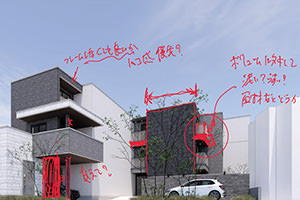
Reviews verify design proposals
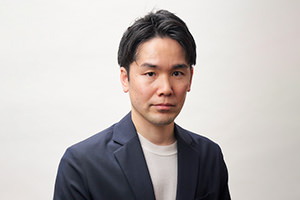
Chief Designer Nishimoto, a colleague and friendly rival to grow with
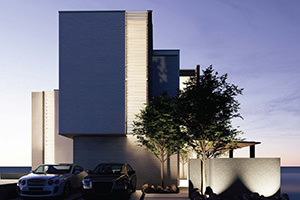
Pursuing what makes this land unique

Meaning woven into a single line
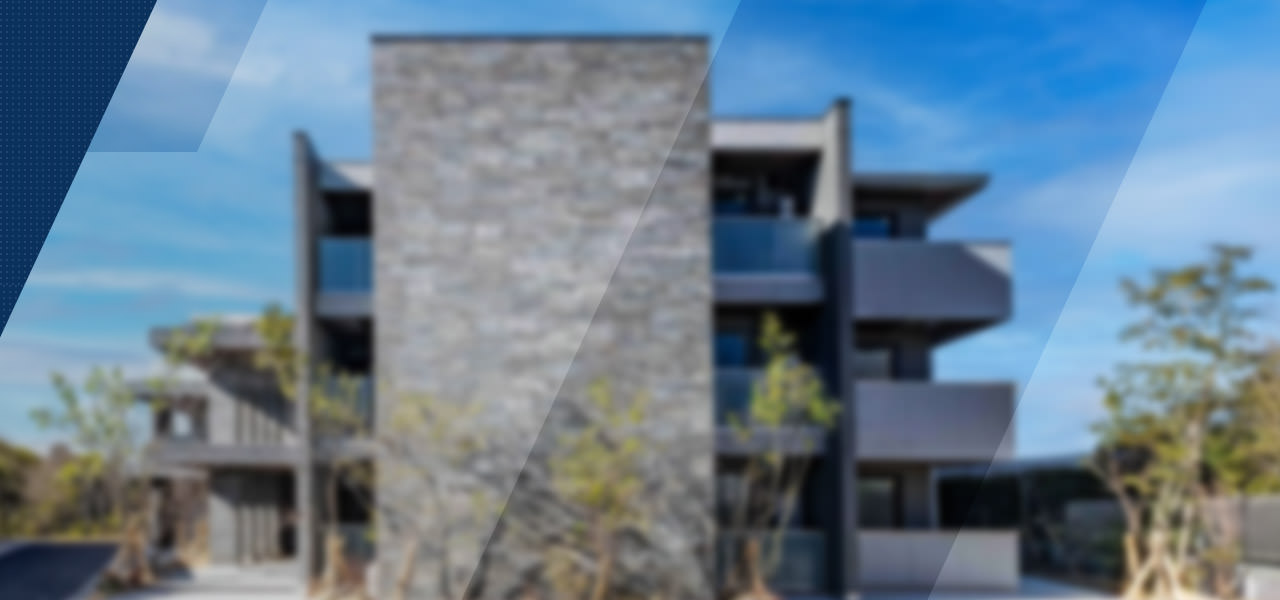
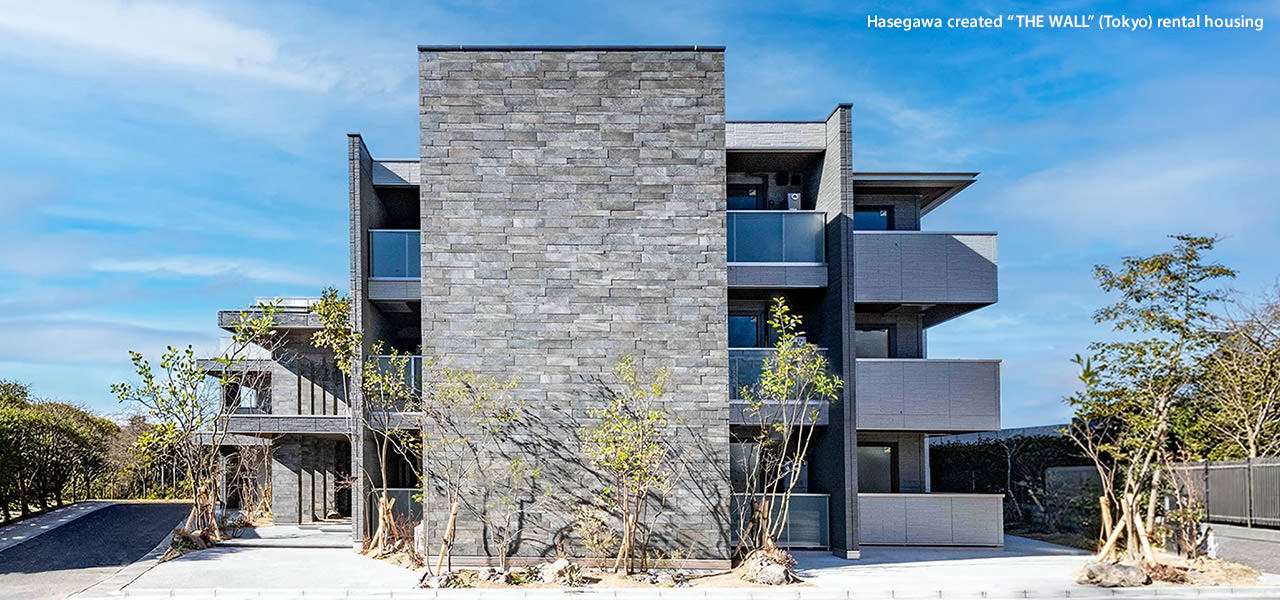
The first design that Hasegawa took charge of after arriving at the Residence Design Office was the rental housing “THE WALL.” Full of enthusiasm, he thought, “I want to build something that can serve as my calling card in the Tokyo metropolitan area.” Then, upon visiting the site, what Hasegawa witnessed was a scene of calm waters and lush greenery.
Flowing behind the property was a small stream, and along that stretched a promenade lined with road-side trees. With few tall buildings in the vicinity, the sky extended far and wide. Would it be possible to synchronize a building and such a surrounding environment to create a unified view?
The property, being triangular rather than a rectangle, made it so that if you aligned the building straight with the angle of the lot, design efficiency would be improved and it would be easier to secure floor space suitable for rental use. That said, straight lines are strong. Given this strength, the connection to the river and the promenade would be cut off. Thinking “I definitely don’t want to do that,” Hasegawa deliberately tilted the entire building at an angle.
Furthermore, he redrew the straight contour of the building’s rear as a gently meandering line. Then he positioned several small green spots along that line to create a landscape that blends in with the river and road-side trees.
On the other side, a broad wall serves as the face of the building’s façade.
Precisely because the property is on the side of a road that cars pass by in the blink of an eye, Hasegawa wanted it to leave a lasting impression that stands out from the surrounding streetscape. However, building a wall that spans the entire width of the frontage area feels constrictive. So, he brought only the wall forward and set the main structure back. A row of columns was placed along the approach to guide the eye deeper inward.
Overall, the street-facing side of the building expresses a dignified strength, and the rear along the river is harmonious and gentle. While giving a single building different expressions, each offers a unique solution derived from its relationship to the site. That’s where Hasegawa’s pride as a designer shines through.
Whether it’s a wall or a passageway, there’s always a reason behind the “single line” that Hasegawa draws.
In his Hiroshima days, a residential designer who Hasegawa respected gave him some words of advice. “You have to put your heart into it when you draw those lines.” On the other hand, an on-site craftsman told him, “Don’t think about it, just relax and draw the lines.”
Even a single line on a drawing can make construction problematic, detract from the building’s beauty, and at times reflect back to costs. What he tells himself is “take responsibility for every single line.”
THE WALL is no exception to the rule. The designs were complex, and the floor plans like a puzzle. Hasegawa didn’t just pass that burden on to the contractor and call it a day. He was a constant presence at the construction site, carrying on discussions with the workers, and when problems arose, he sincerely apologized.
After the project was completed, the construction supervisor approached him and said, “I’d like some photos of the finished project.” When he asked about how many times he had made that request, the response thrilled him. “It’s my first time to ask.”
This amounted to a calling card encapsulating the thoughts of Hasegawa and his team.
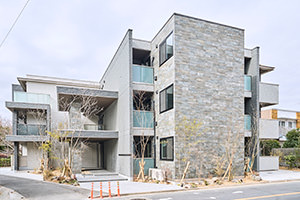
A broad wall forms a striking façade
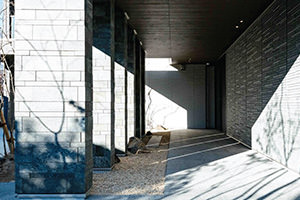
The approach where a row of columns draws the view to a central point
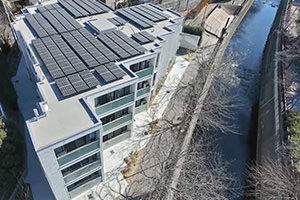
The building’s reverse side consists of a continuous, jagged contour
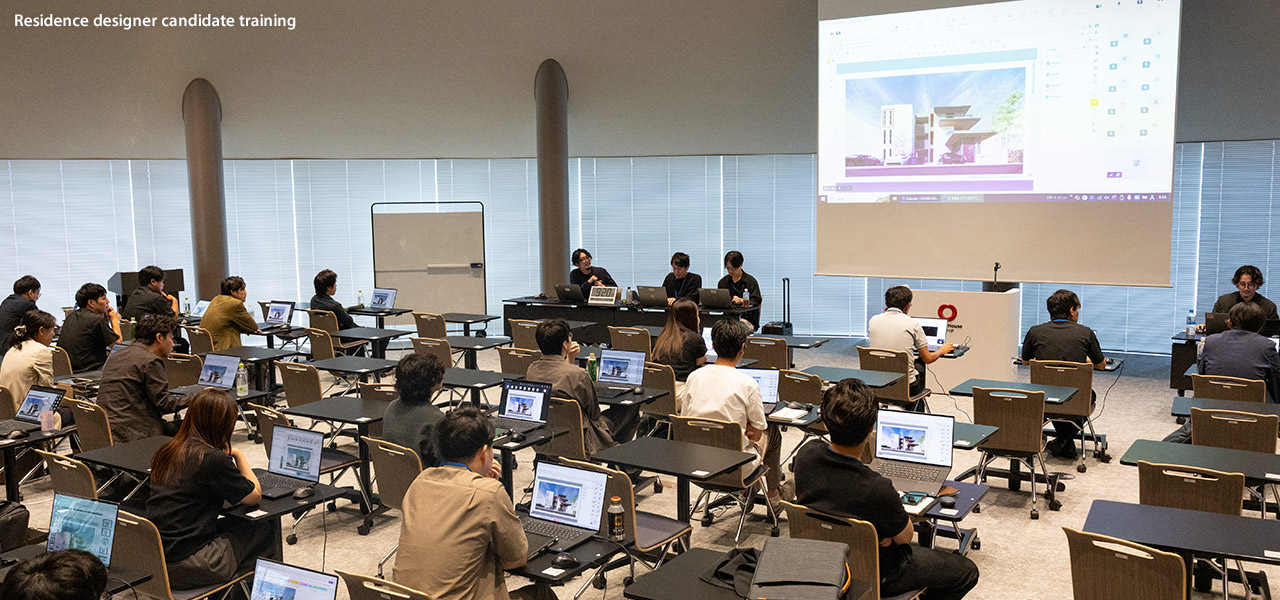

Teaching about designs
that have no right answers
Weave meaning into a single line, and then take responsibility. To instill this approach nationwide, the Residence Design Office regularly holds webinars for its hundreds of designers.
In addition, the “residence designer candidate training,” which lasts about one year, provides an opportunity to hone one’s design skills to an even greater degree. Candidates are selected from among the winners of the Company’s “National Apartment Building Design Competition.” Only those who hold a First-Class Architect license, have completed advanced training programs, and met strict standards are certified as residence designers.
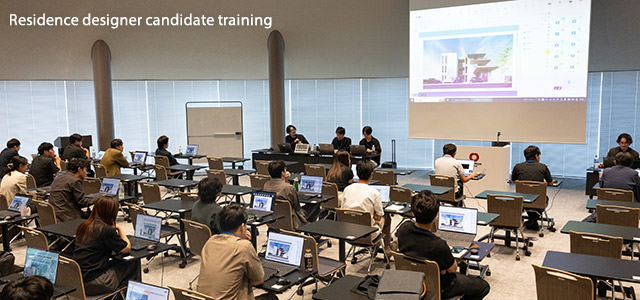
On this particular day, candidates from around Japan gathered at the “Kotokurie” Daiwa House Group MIRAI KACHI KYOSO Center. The theme of the two-day training session was architectural form, and serving as instructors were members and residence designers from the Residence Design Office.
Today’s challenge was about how to express through architecture the property owner’s wishes, namely, for a “sense of floating,” a “sense of mass,” and a “sense of depth.” Candidates must quickly produce 3D perspective drawings, floor plans, and layout diagrams based on a single theme.
When candidates start their presentations, the instructors’ questions suddenly become sharp and probing. What exactly is meant by the “sense of floating?” What makes something appear to be floating in the first place? Is it the way volume is created? Is it the effect of shadows? The training breaks down a single word into its architectural components and delves deeper into its meaning.
Confronting issues are not just the candidates alone. Instructors draw up their own plan based on the same conditions.
The theme assigned to Hasegawa was “sense of depth.” Hasegawa incorporated all the design methods covered in the two-day lecture series and tied them together to create a highly polished architectural work. “Instead of building it up from the planning stage like I usually do, I worked backward from the final form, so my brain got tired in a weird way,” he said with a laugh. “I designed this project with the intention of covering all the lecture material” he added, showcasing his overwhelming design prowess.
At the training, candidates see with their own eyes how one instructor challenges another’s plans or remarks with a differing opinion. Instructors, too, must engage seriously with the topic, think it through, experiment, and lay bare the entire process. Hasegawa believes that “this stinging sense of tension leads to more meaningful training.”
One trainee, who was also Hasegawa’s subordinate, said that “Mr. Hasegawa is skilled at motivating people. Plus, it’s rare to find a senior colleague who cares so much about their juniors.” Nishimoto of the Residence Design Office, also gave his assessment, saying that Hasegawa is “a designer who cares deeply about people and observes them closely.”
Behind Hasegawa’s commitment to nurturing talent lies an endless passion for design, that since his youth drove him to continually pursue ever better designs. Having recognized Hasegawa’s rebellious character and spirit of confronting challenges, there were people who supported him. To explore the origins of this, let’s go back to Hasegawa’s time in Hiroshima, when he was still a relative unknown.
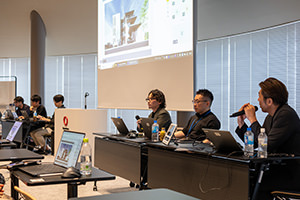
Instructors make their arguments out in the open

Tackling the same challenges as the candidates was Hasegawa
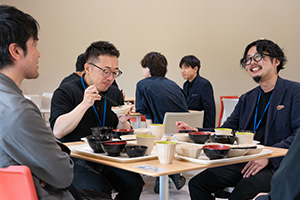
Hasegawa enjoying discussion time
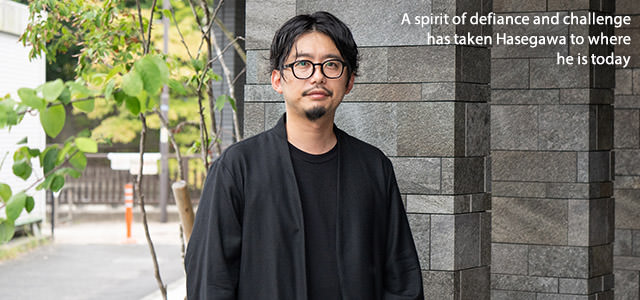

From a maker of designs,
to a creator of culture
Hasegawa joined the Company at age 20, after having graduated from the architecture program of a technical college. Although he had set his sights on working in retail or office design, he was assigned to the Apartment Design Section of the Hiroshima Branch (currently Chugoku Branch). So, he buckled down, thinking “I’m here now, and this is where I’ll make my mark.”
At the time, however, more than buildings, emphasis was placed on landscaping and gardens, and property owners tended to focus more on profitability than on design. Hasegawa, while being a newcomer who had been focused on furniture and creating advertising materials since his days at technical college, and had been working on practical design in the commercial world, kept insisting that “this approach won’t work for apartment buildings.”
“That was the toughest time for me.” Proposals he thought were spot-on would be revised. No one understood. They wouldn’t let him start anything. He thought about quitting the Company countless times. That said, Hasegawa recognized that he wasn’t quite good enough, so he took on more work than any of his peers and chose the most difficult tasks.
Then, three or four years after joining the Company, a sales representative approached him, saying, “I’d like to leave the building of my new home up to you. Go ahead and design it however you like.” Hasegawa had no experience with private residences, so he asked why. The reply was, “If anyone can do it, that would be you.” Years later, that person said with pride, “I wasn’t wrong, was I?”
Over his seventh to eighth year, the way he interacted with clients had changed. He attended business meetings to discuss the kind of lifestyle he wanted to offer and incorporated owners’ aspirations into plans which had originally begun as land-use projects. In a project to rebuild what was formerly a family home as rental housing, the client expressed a wish to “preserve the view I’ve known since childhood,” so Hasegawa retained the centuries-old pine trees, the traditional Japanese gate, and the stone walls.
Then, in his 16th year, Hasegawa was bestowed with the President’s Award for Outstanding Employee, the highest honor in the Company’s internal awards program, the “Daiwa House Award.”
The times changed. Young up and coming successors to building owners started to become involved in decision-making, and building design and “who will design it” were increasingly becoming factors in the decision-making process. The times finally caught up with the approach to design that Hasegawa had long pursued.
Hasegawa is currently engaged in a series of design projects that seek solutions unique to each property, and even extend to shaping people’s lifestyles and memories. He brings the “creativity” of thinking outside the box that delights customers. “Sincerity” in being responsible for a client’s assets. Then, the “enthusiasm” to incorporate vision into a design. These reflect our founding spirit of “carrying out work with creativity, sincerity, and enthusiasm,” which is clearly alive and well.
Looking back, there was always someone by Hasegawa’s side to guide him. When he first joined the Company, his supervisor told him, a maverick new hire, “You’re a bit weird, but if you want to do it, go ahead and give it a try,” entrusting him with work, and watching over him while providing encouragement to “follow your own path.”
When Department Manager Tanigawa was setting up the Residence Design Office, he repeatedly tried to persuade Hasegawa, who flatly refused, saying, “I want to be on the front lines.” Tanigawa voiced his expectations, saying, “He is able to articulate designs and communicate them clearly while listening to others. I hope he will continue to maintain and further hone his top-level design skills.”
Hasegawa, guided by such people, has at the same time as being a “designer,” become a “creator of design culture.” He gives young designers who are rising to meet new challenges the same opportunities that he once had to think for themselves and forge their own paths.
If the people who embrace that aspiration spread across the country, “D-ROOM” will transform into a brand chosen for its design. “When that time comes, the Residence Design Office should be disbanded, but that’s just my personal opinion, though (laughs).” The day when the Residence Design Office becomes nothing special—It’ precisely when that role is fulfilled that Hasegawa’s dream will have come true.
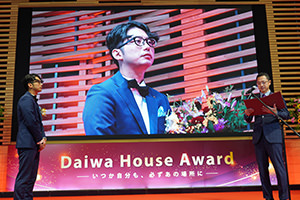
The ceremony to present the Daiwa House Award in his Hiroshima days

The architect directly briefs the client
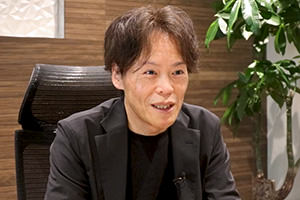
Department Manager Tanigawa supports Hasegawa
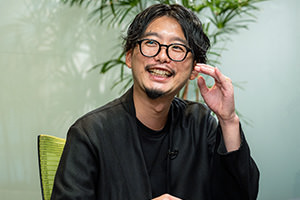
Changing the future of rental housing with design
*All information as of September 2026