MENU
Circular Economy
Our prosperity has long depended on extracting, processing, consuming, and disposing of large quantities of natural resources.
However, these economic activities and lifestyles have also caused significant environmental impacts, including the depletion of natural resources, pollution from waste, climate change driven by greenhouse gases emissions, and the destruction of habitats for wildlife.
To pass on a rich and healthy planet to future generations, we must change the way we act today.
Striving to achieve both zero environmental impact and business growth, we are working toward the realization of a sustainable society where resources remain in circulation.

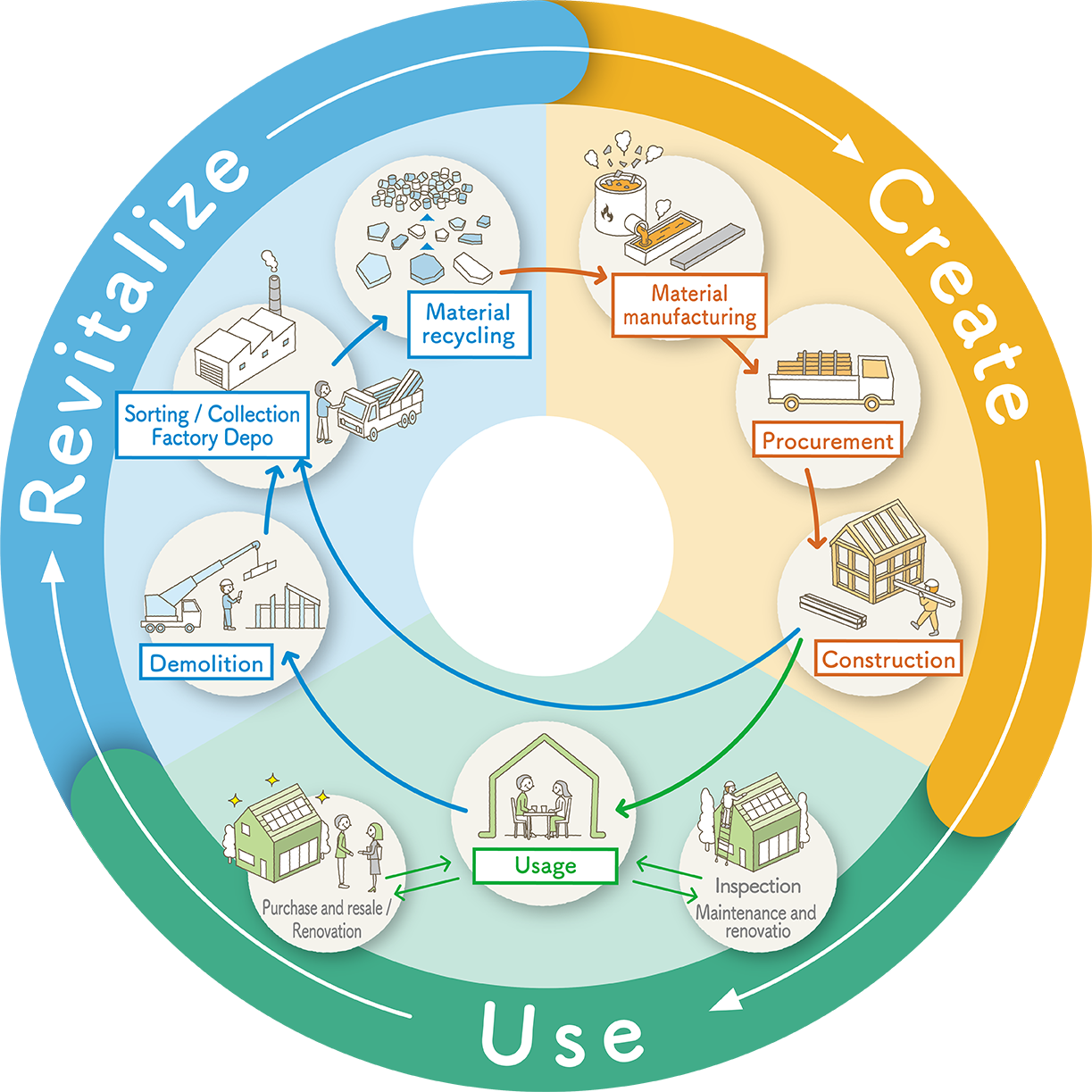
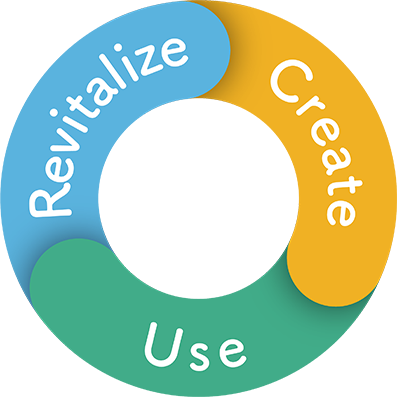
To help realize a circular society based on the sustainable use of resources, we will:
We also believe it is our mission to promote resource-conscious lifestyles, which is essential for realizing a circular society as a company that supports people's daily lives.
Connecting
Resources,
Connecting
the Future
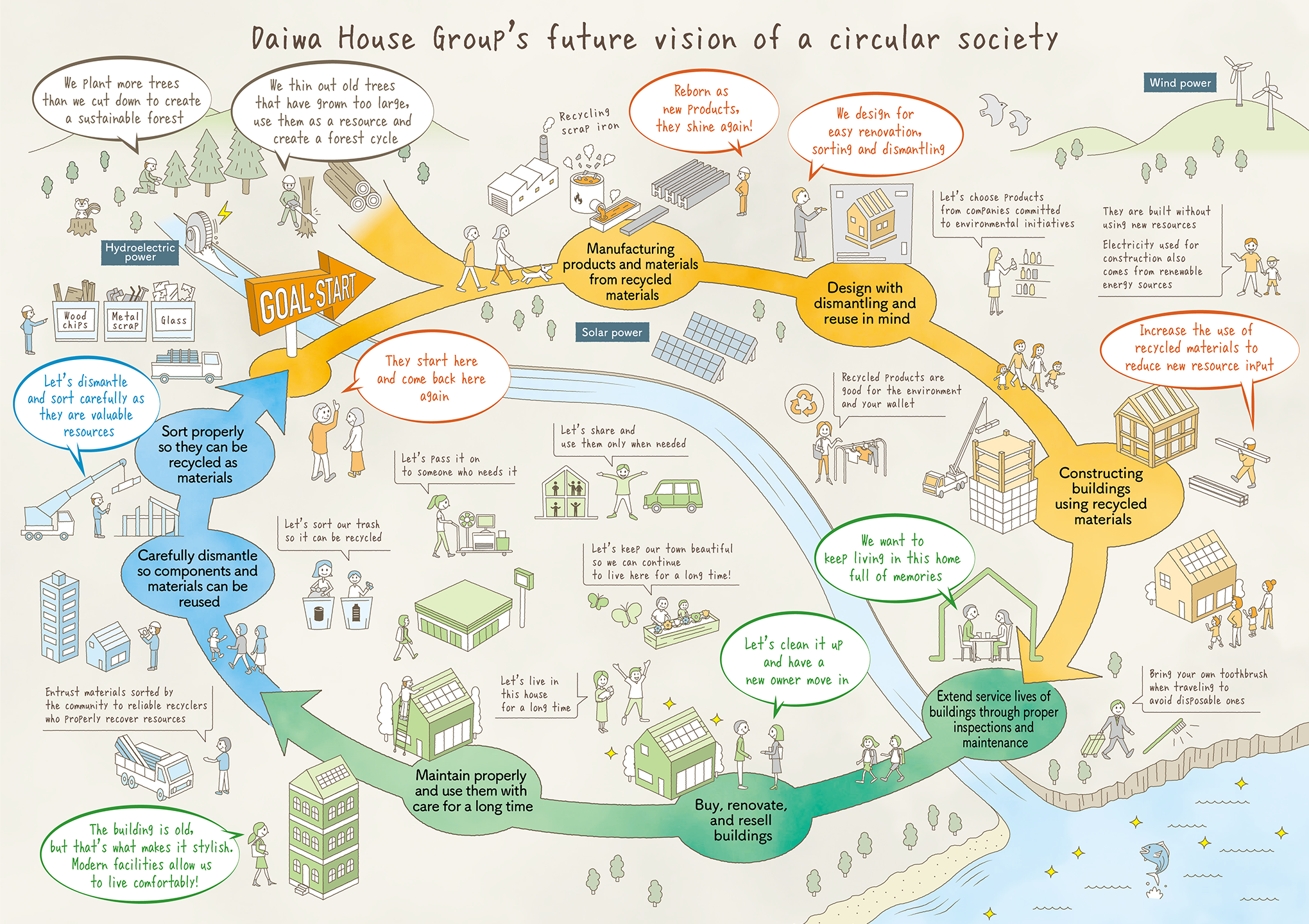
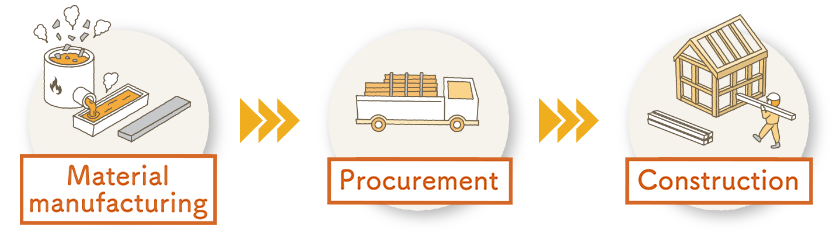
Use Recycled Materials and Design for Easier Material Reuse
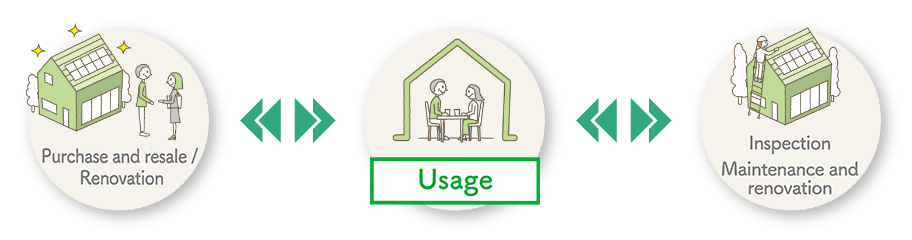
Properly Maintain Buildings for Long-Term Use
Reduce Waste Through Separate Collection, Reuse, and Recycling
By fostering a culture of responsible resource use through ideas such as "used items are still resources" and "the longer a product is used, the greater its value becomes," we will enhance the effectiveness of our circular economy initiatives.

Management Metric under
Environmental Action Plan
Recycled-material usage rate (steel) for principal building materials in new construction
(FY2029 target)
38%*
* Initially, the scope will be limited to steel only, with plans to expand to other materials in the future.
We will promote the transition of construction materials toward recycled materials and materials from non-depletable resources to minimize the extraction and processing of virgin materials.
By designing buildings with future renovation and dismantling in mind, we can facilitate proper maintenance and recycling of materials after demolition.
for details
Example of a Building Supporting Decarbonization,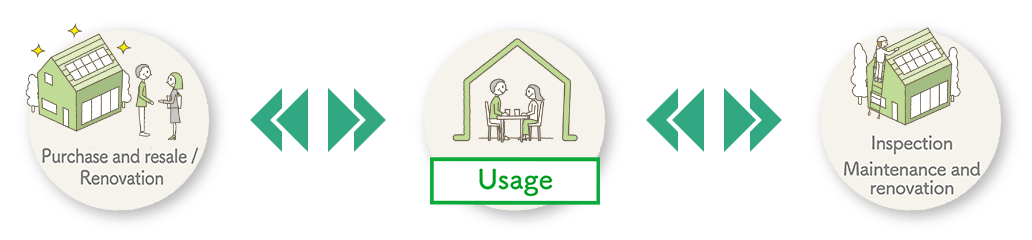
Management Metric under
Environmental Action Plan
Contribution to reduced resource input through extending service lives of existing buildings
(FY2029 target)
1.5million tons
Timely inspections and maintenance help maintain building durability and extend their service lives. Rather than leaving unused buildings vacant, we transfer their ownership to those who need them, thereby ensuring the effective use of limited resources.
for details
Livness Business: Realizing Circular Use of Building Stock Long-Term Warranty and Inspection Programs for Longer Use of Buildings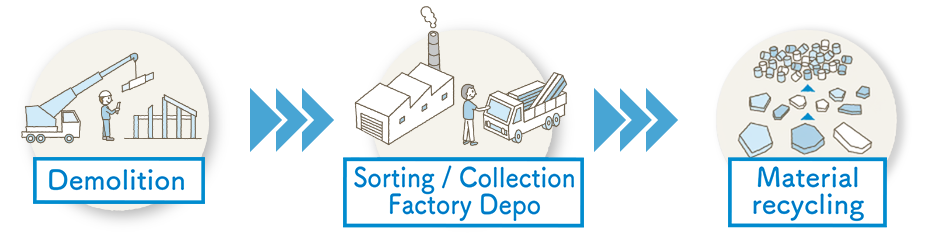
Management Metric under
Environmental Action Plan
Material recycling rate of plastics (production)
(FY2029 target)
34%*
* Initially, the scope will be limited to manufacturing sites only, with plans to expand to construction sites in the future.
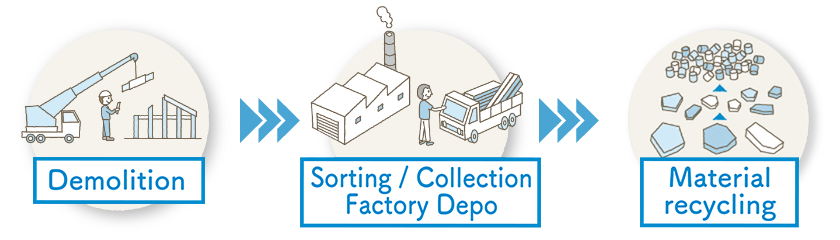
Through the careful dismantling of buildings, materials and components can be reused in new buildings, thereby reducing the energy and resources required for processing new materials.
By-products that have been properly sorted are entrusted to recyclers and transformed into new construction materials.
for details
Example of a Building Constructed with 90% Recycled Materials Design with the End in Mind at Expo 2025 Osaka, Kansai