Daiwa House Group

Daiwa House Group

Daiwa House Industry’s Support for
Disaster RecoveryPost-Disaster
Public Housing

― Supporting disaster-stricken areas
with top-class private-sector performance ―

Public housing that supports recovery from a disaster, also known as “post-disaster public housing,” refers to public rental housing constructed by local authorities for those who have lost their home due to a catastrophic event. At the very foundation of Daiwa House Industry lies an enduring commitment to reconstruction. We are a company that was founded by a man who, being deeply moved by the extensive damage to homes caused by a major typhoon, sought to develop buildings that were both strong yet flexible.

Still today, we strive to construct post-disaster public housing that brings together our business development capabilities and technological prowess against a backdrop of proven top-class private sector performance.

Finding solutions to the issues facing disaster-stricken areas with
business development capabilities and technological prowess

Acquisition of financial resources and budget

Acquisition of financial resources and budget

Land acquisition

Land acquisition

Adherence to systems, laws and regulations

Adherence to systems, laws and regulations

Business planning and proposals

Business planning and proposals

Establishment of systems for construction and operations

Establishment of systems for construction and operations

Addressing housing needs of disaster victims

Addressing housing needs of disaster victims

Business development capabilities

We reliably move forward on reconstruction projects based on the most extensive track record in the private sector

Municipalities quite often lack experience undertaking projects to develop post-disaster public housing. Such projects consist of emergency response measures and necessitate swift implementation during peak periods of disaster recovery operations, and represent an extremely high level of difficulty.

Daiwa House Industry has over many years accumulated vast experience in post-disaster public housing business schemes and has steadily rolled out projects, primarily in coordination with local communities and municipalities. Within the company, a dedicated department responsible for reconstruction support collaborates with offices based in regions around Japan to establish a system that facilitates smooth progress, even for complex coordination and planning. Depending on the circumstances of the disaster-stricken area, within this framework we can take a wide range of measures, from large-scale and intensive community development, to small-scale rural-type housing construction.

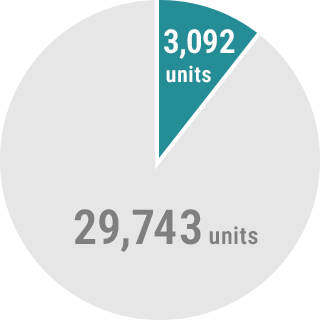
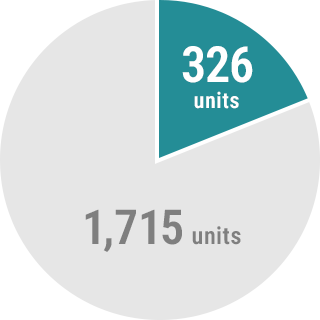
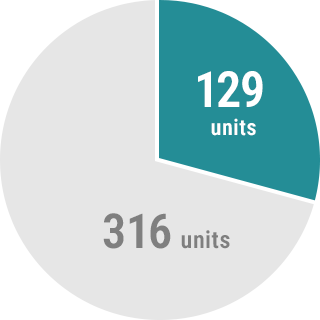
As a result, the numerous post-disaster public housing projects we have engaged in for reconstruction following the Great East Japan Earthquake, the Kumamoto Earthquake, the torrential rains in western Japan, and other disasters have made us the most experienced company in the private sector in terms of both construction and adoption numbers (as of September 2025).

Building on such a track record, we vigorously support reconstruction efforts through the dual strengths of our nationwide corporate capabilities and the great care and on-site responsiveness provided by our bases firmly rooted in Japan’s regions. For a first consultation, please feel free to visit your nearby Daiwa House Industry office.

Post-disaster public housingConstruction and adoption results

3,547units

*As of May, 2022
*Daiwa House Industry
*Great East Japan Earthquake, Kumamoto Earthquake,
torrential rains in western Japan, and intense rainfall in July 2020

Great East Japan Earthquake
Kumamoto Earthquake
Torrential rains in western Japan
  • Daiwa House Industry
  • Other business operators (total)

Technological prowess

We propose optimal housing based on diverse technologies and options

Daiwa House Industry is a company that has earned the “No. 1* position in the housing, construction, and real estate industries,” in terms of the Group’s consolidated net sales. As a pioneer of industrialized construction that paved the way for prefabricated buildings, we introduced the “Midget House,” considered to be the origin of prefabricated housing, and have honed our technology and expertise over more than half a century while developing steel-frame and wooden homes.

The technical prowess we have cultivated in this way is reflected in high housing performance, including outstanding seismic resistance, exceptional durability, and energy efficiency.

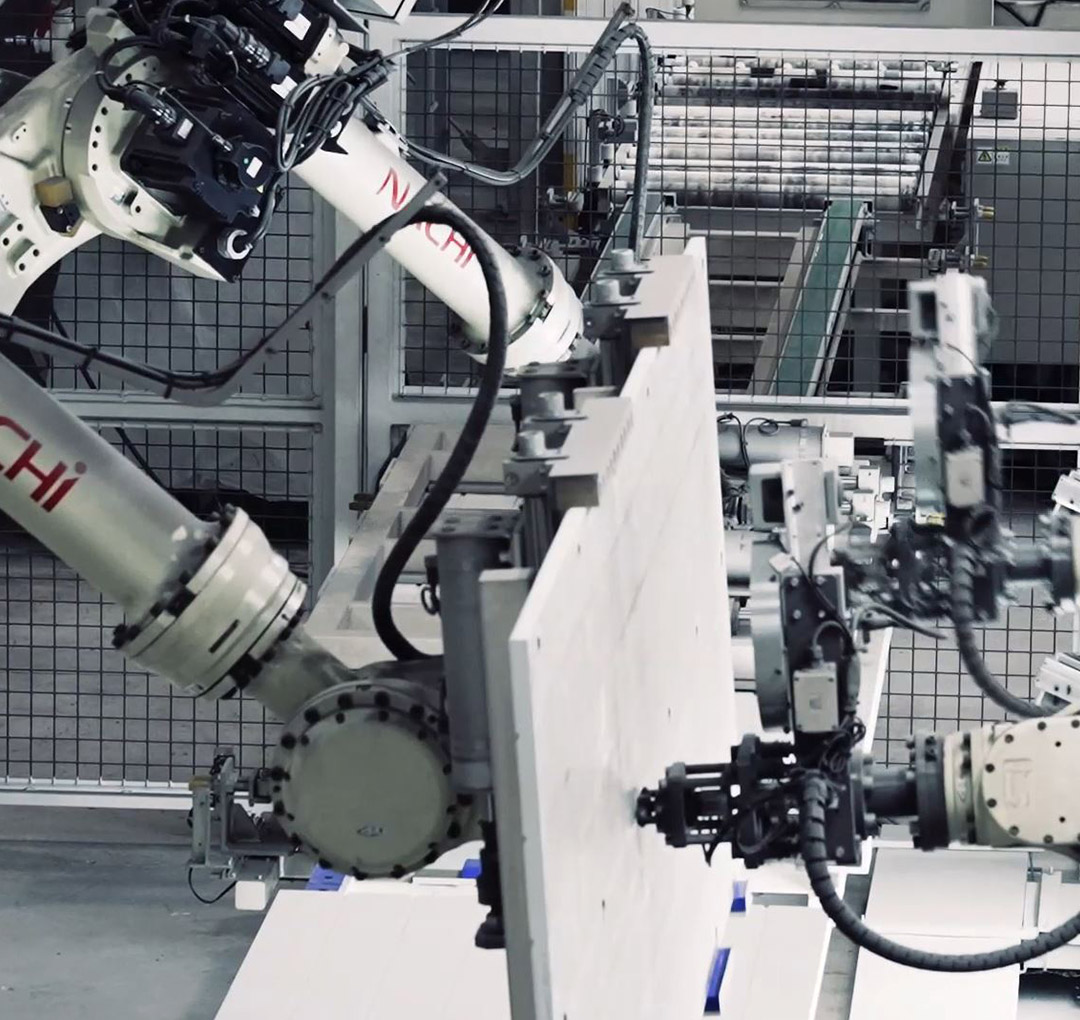
At our company-owned factories, a highly systematized production system where robots and skilled craftsmen collaborate enables the stable supply of high-quality, precision-engineered housing components. We swiftly deliver components to disaster-affected areas from our nationwide network of factories and supply chains.

We are also advancing pioneering initiatives in environmental considerations such as ZEH and ZEB, while contributing to the promotion of decarbonization through post-disaster public housing.

*As of March 31, 2025

Diverse variation

Construction method
Steel-frame (light-weight and heavy steel structures), wood
Form
Joint housing (medium- and low-rise), single-family housing (two-story, one-story)
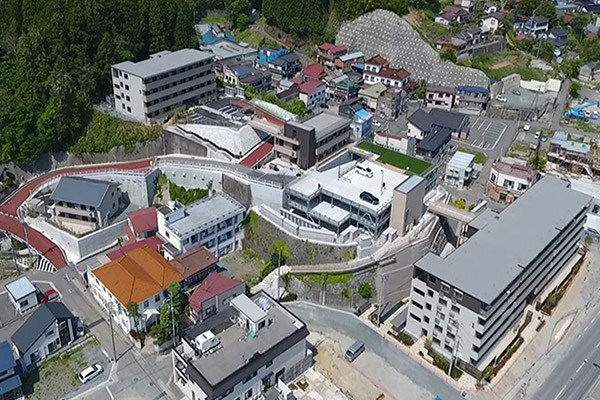
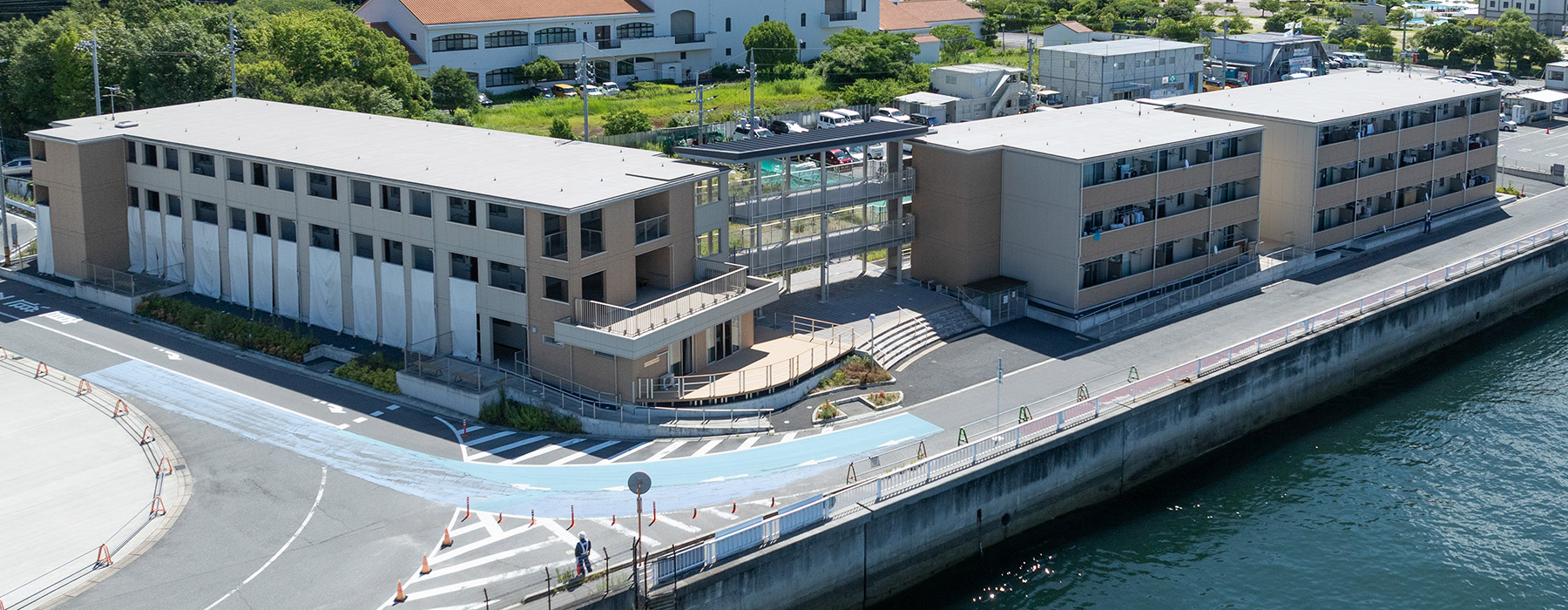
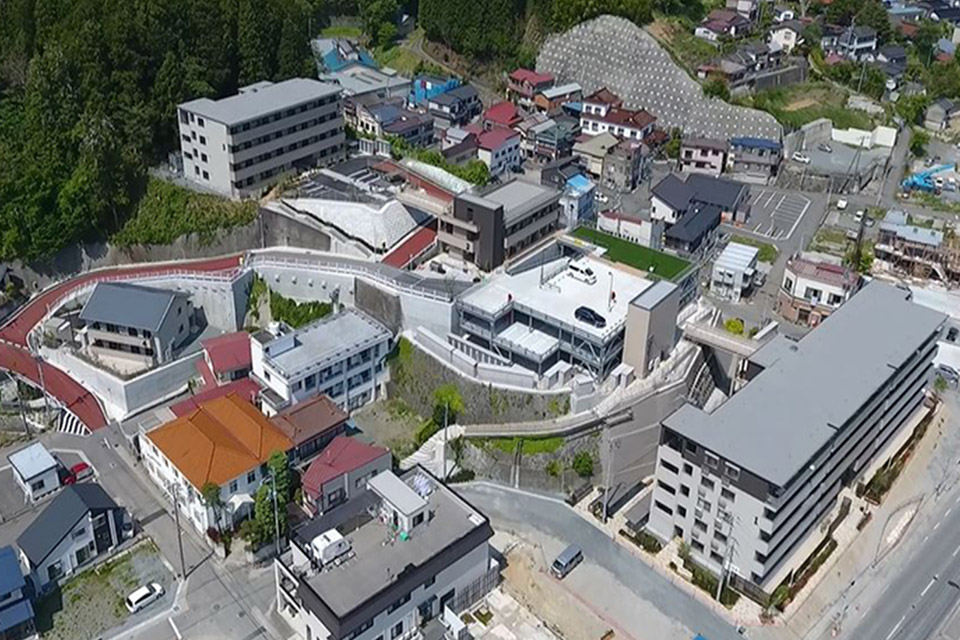
"Municipal Uomachi Irizawa Housing" in Kesennuma City, Miyagi Prefecture

Business development capabilities

We offer comprehensive support, from building removal to site preparation and construction

(Great East Japan Earthquake: “Municipal Uomachi Irizawa Housing” in Kesennuma City, Miyagi Prefecture)
  • Site area:8,540.86m2
  • Total floor area:6,448.94m2

Issues

  • The inner bay area, where disaster victims were concentrated, had little flat land and was also at risk of being designated a disaster-prone zone, making it extremely difficult to secure land suitable for safe housing construction.
  • To utilize a site with steep slopes around a closed school, the design was required to fulfill the necessary functions for public housing, including achieving barrier-free accessibility and establishing evacuation routes.

Solutions

  • Daiwa House Industry undertook the entire process, from removal of the closed school to design, site preparation, and construction. We also introduced a method, pioneering for a post-disaster public housing project at the time, whereby as a final step the city performed an inspection and purchased the property. This enabled us to move forward with the project swiftly and in a reliable manner.
  • Elevators are used for vertical mobility, while people can move back and forth horizontally via bridges, and in this way we resolved elevation differences. Barrier-free access has been achieved without stairs, allowing passage even for wheelchair users.

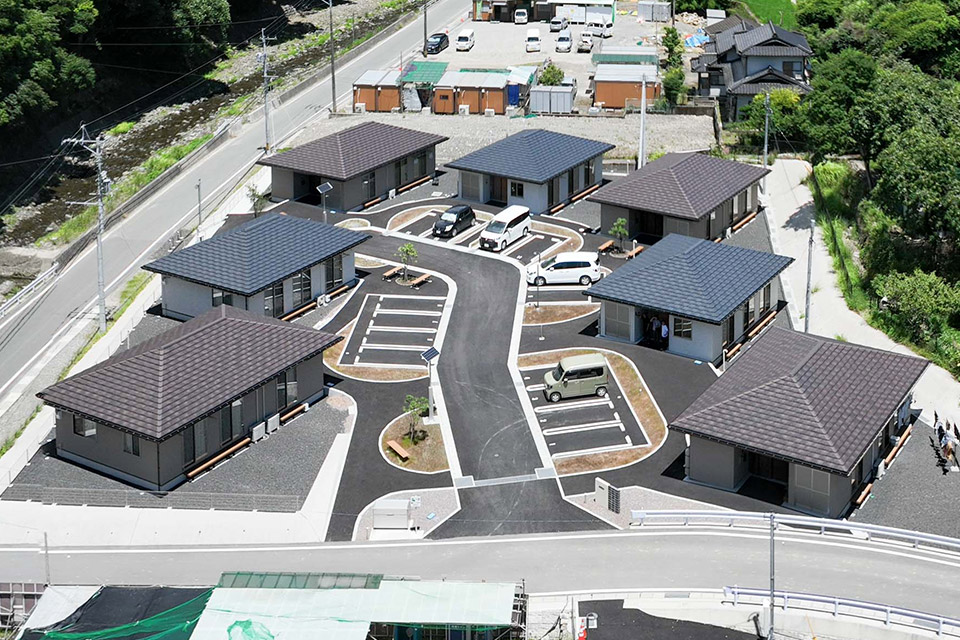
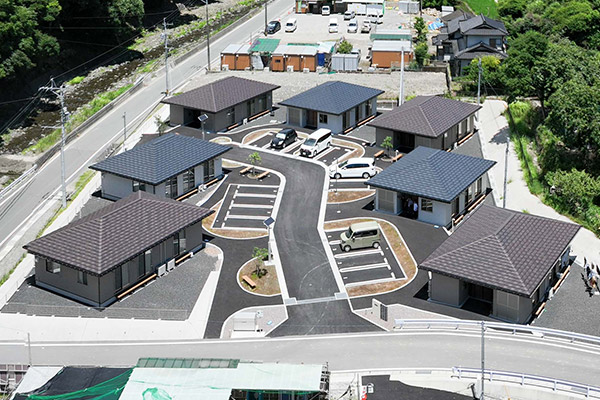
"Kamise Housing Complex" in Kuma-mura, Kuma District, Kumamoto Prefecture

Business development capabilities

Recreating the bonds of a small community

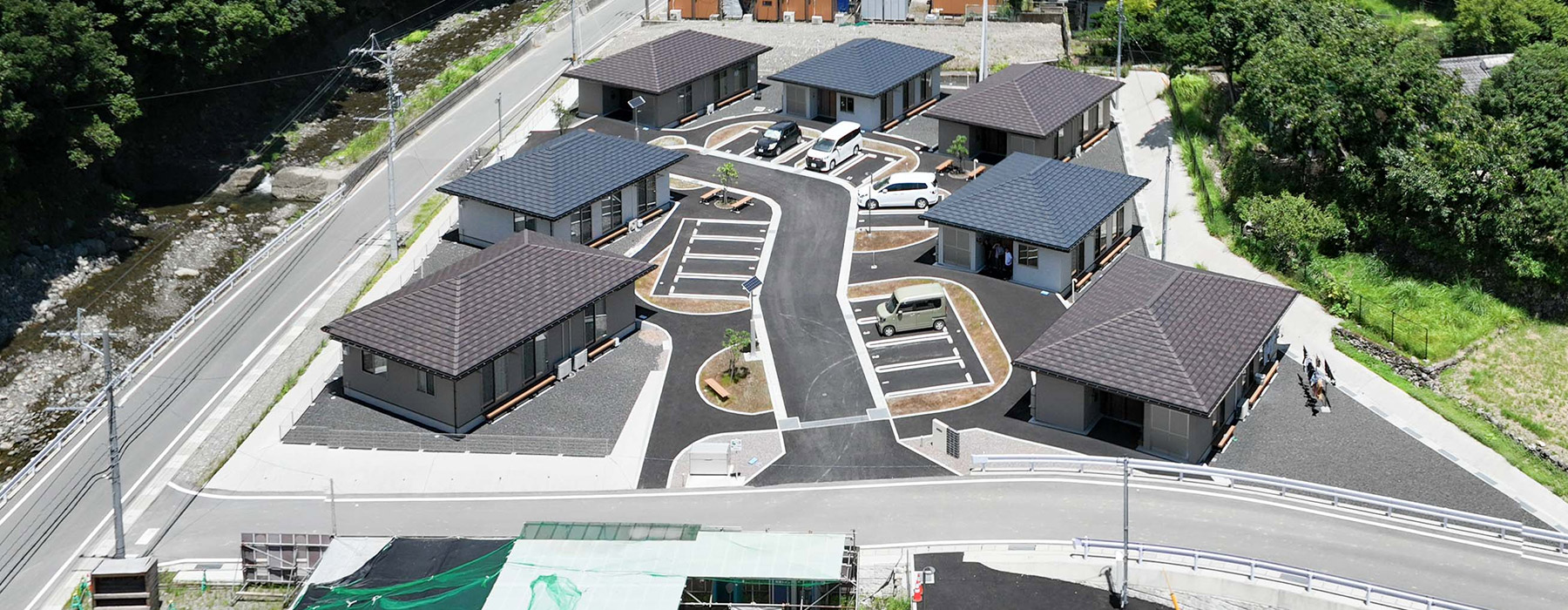
(The intense rains of July 2020: “Kamise Housing Complex” in Kuma-mura, Kuma District, Kumamoto Prefecture)

  • Site area:1,901.01m2
  • Total floor area:486.00m2

Issues

  • This intense rain event in Kumamoto devastated 30% of households in the Kamise area, while public facilities such as village-owned housing suffered catastrophic damage, making the reconstruction of safe housing an urgent priority.
  • Many houses along the Kuma River were flooded, and mudslides occurred on the banks of the Sendai River, a tributary of the Kuma River that flows right beside the site. It would be necessary to have the participation of a business operator capable of handling civil engineering and construction projects from start to finish.

Solutions

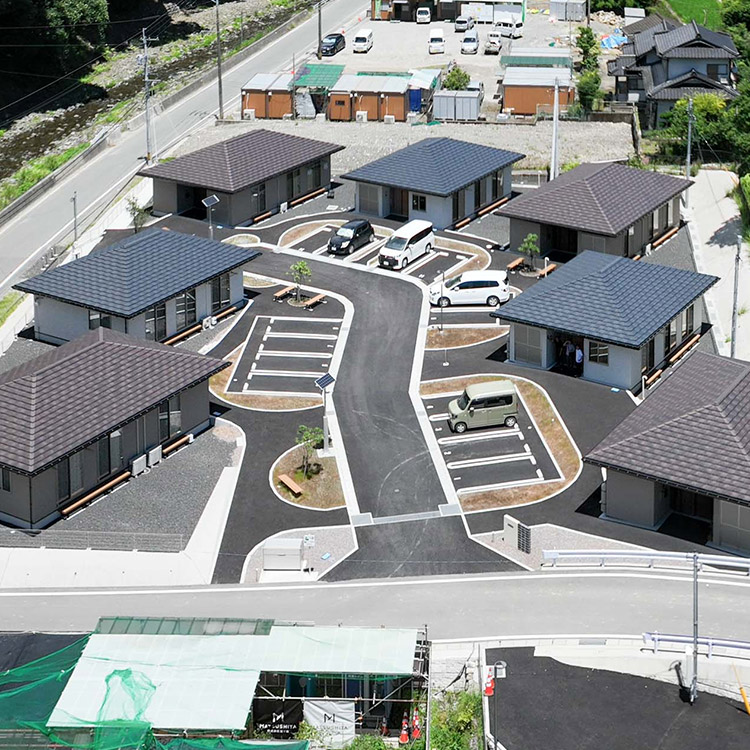
  • Utilizing the national small-scale residential district improvement project, we constructed seven single-story wooden houses after having raised the land surface level. These houses support the rebuilding of lives by enabling disaster victims to return to their original communities.
  • As we considered the formation of a seven-unit community, we designed clear evacuation routes in the common areas to guide residents to higher ground, creating an environment that facilitates coordinated evacuation.

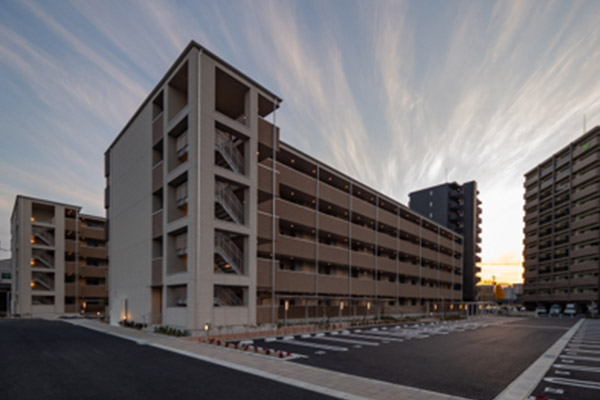
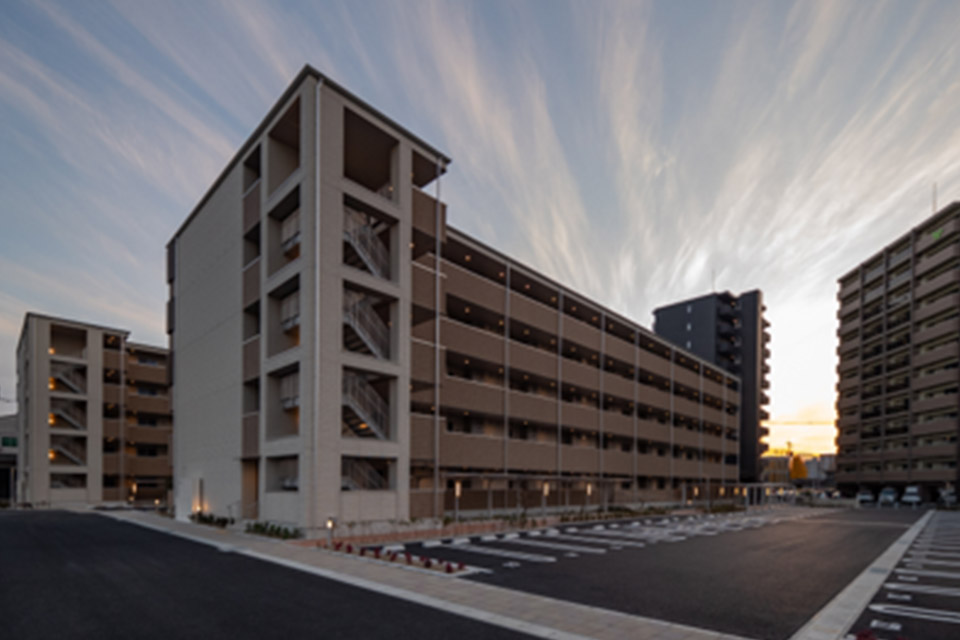
"Minami-Kumamoto No. 2 Housing Complex" in Kumamoto City, Kumamoto Prefecture

Business development capabilities

Expediting provision of high-performance housing

(Kumamoto Earthquake: (“Minami-Kumamoto No. 2 Housing Complex ” in Kumamoto City, Kumamoto Prefecture))
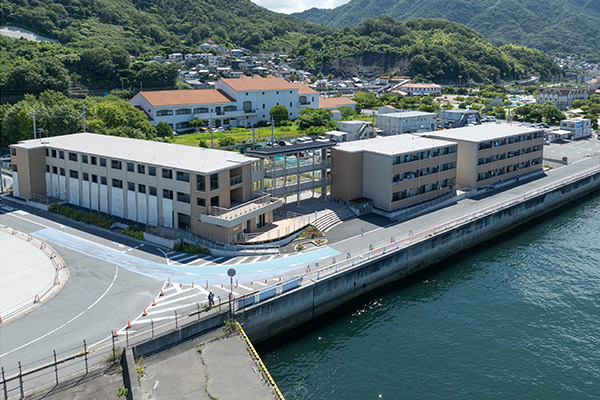
  • Site area:5,324.68m2
  • Total floor area:5,621.16m2

Issues

  • At that time, the inhabitants of approximately 11,000 households in Kumamoto City were living in temporary housing. This made it an urgent priority to swiftly provide permanent homes to disaster victims who were finding it difficult to rebuild their homes or secure rental housing on their own.
  • Municipal housing is typically constructed using reinforced concrete (RC). However, due to factors such as weather and material shortages, prolonged construction periods were unavoidable, presenting the challenge of unsuitability for rapid supply.

Solutions

  • We introduced “skye,” heavy steel-framed housing that combines high strength with design flexibility. Delivery of two five-story steel-frame buildings with 80 units required a short construction period of 11 months, from groundbreaking to completion.
  • In our design of building layouts and common areas, we established open-community-type meeting spaces and fireplace benches. Barrier-free units were also made available, embodying housing that supports disaster response and the creation of a community.

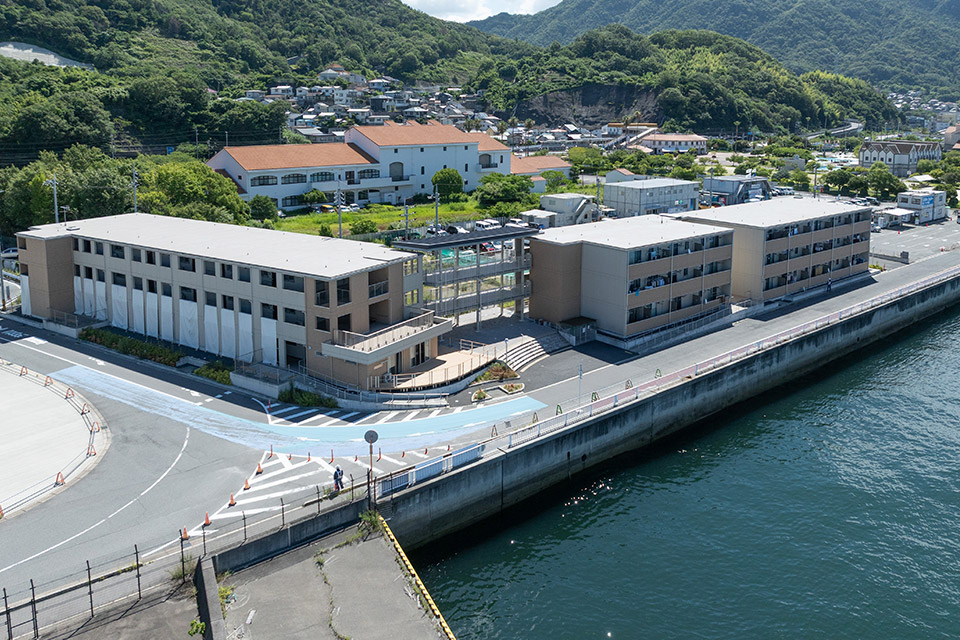
"Tenno Ohama Apartments" in Kure City, Hiroshima Prefecture

Business development capabilities

Creating a space to carry forward the connections formed in temporary housing

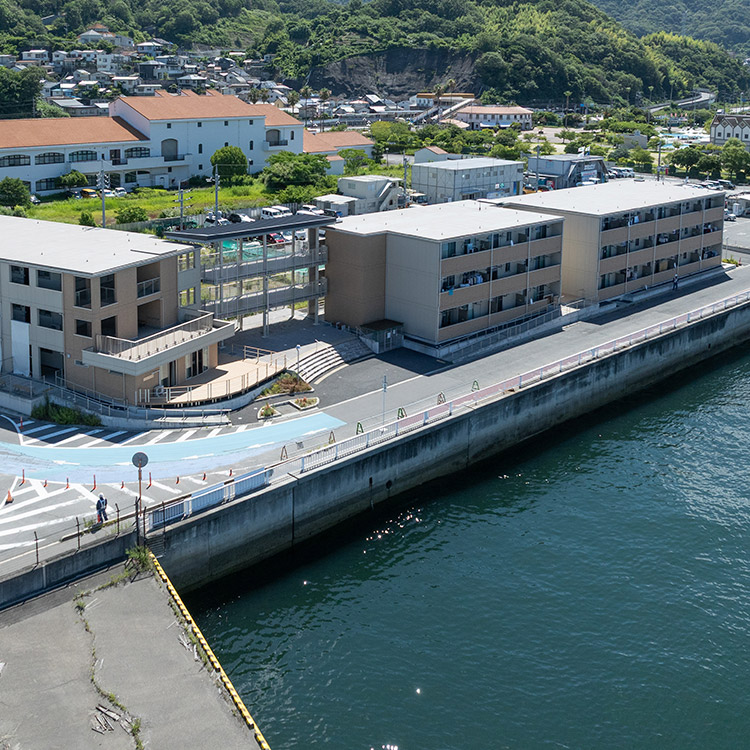
(The torrential rains of western Japan: “Tenno Ohama Apartments” in Kure City, Hiroshima Prefecture)
  • Site area:2,394.32m2
  • Total floor area:2,935.43m2

Issues

  • Kure’s Tenno District was hit by debris flows, landslides, and flooding, with many homes completely or partially destroyed. Securing permanent housing became an urgent priority for households that found it difficult to rebuild on their own.
  • Being squeezed between the mountains and sea, available land was scarce, so it was decided to proceed with construction on land adjacent to the temporary housing where disaster victims resided. This required an arrangement that could be quickly implemented while easing the burden on residents.

Solutions

  • We were able to build a 3-story, 44-unit building within a short construction period by manufacturing the main components of its prefabricated structure at our factory and streamlining on-site construction. It also reduced noise and alleviated the mental burden on nearby residents.
  • To sustain the community bonds fostered in temporary housing, we built onsite meeting spaces and community squares. Community salons and computer classes are held regularly, contributing to the creation of communities.

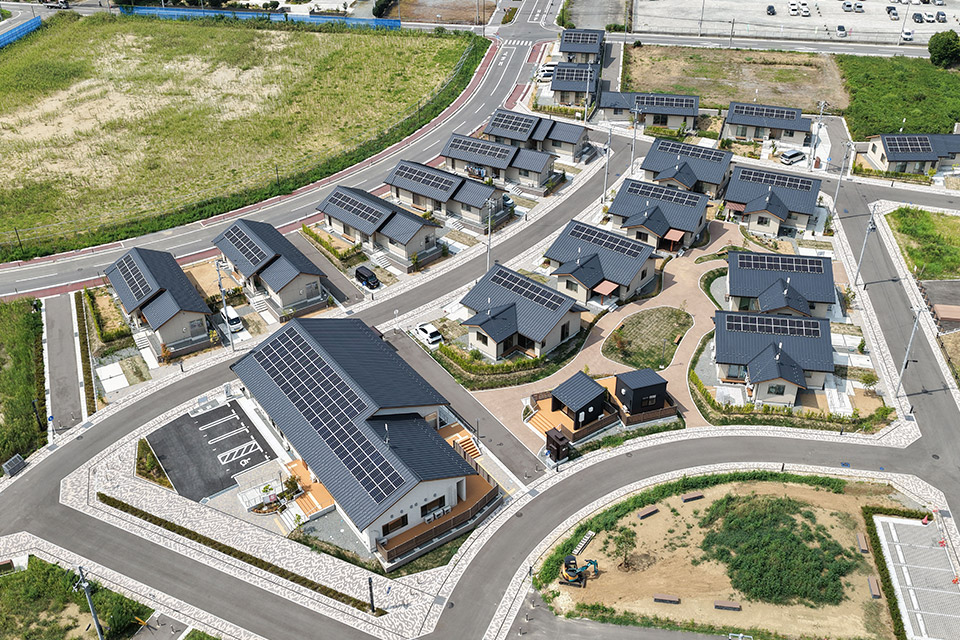
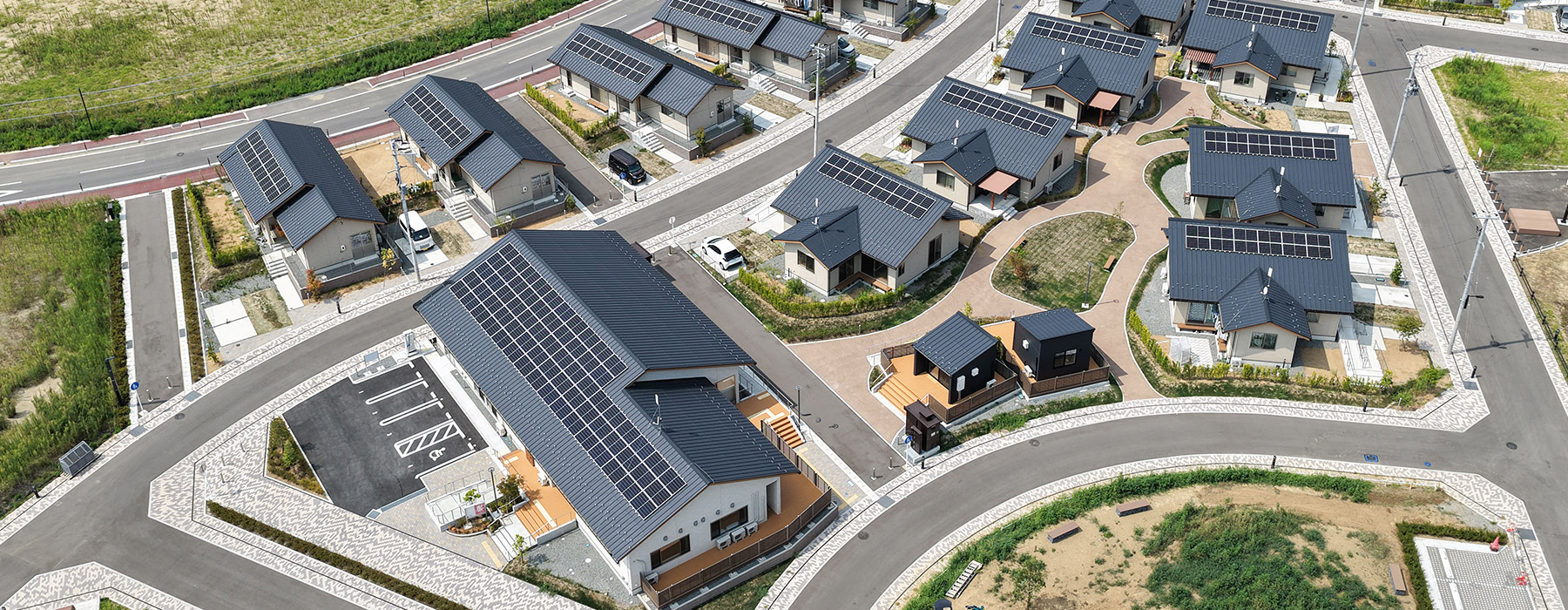
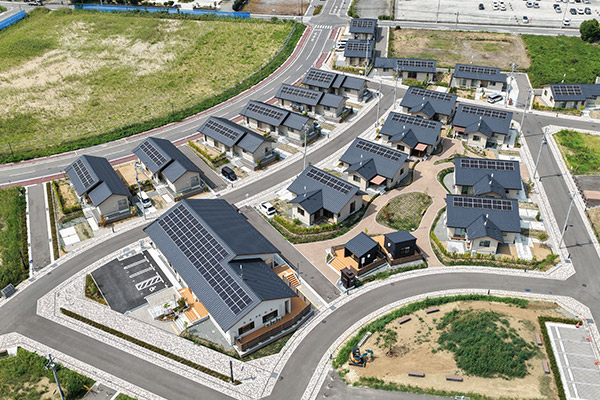
"Hara Renovated Rental Housing" in Okuma, Futaba-gun , Fukushima Prefecture

Business development capabilities

Aiming to achieve decarbonization with ZEH, ZEB, and wooden construction

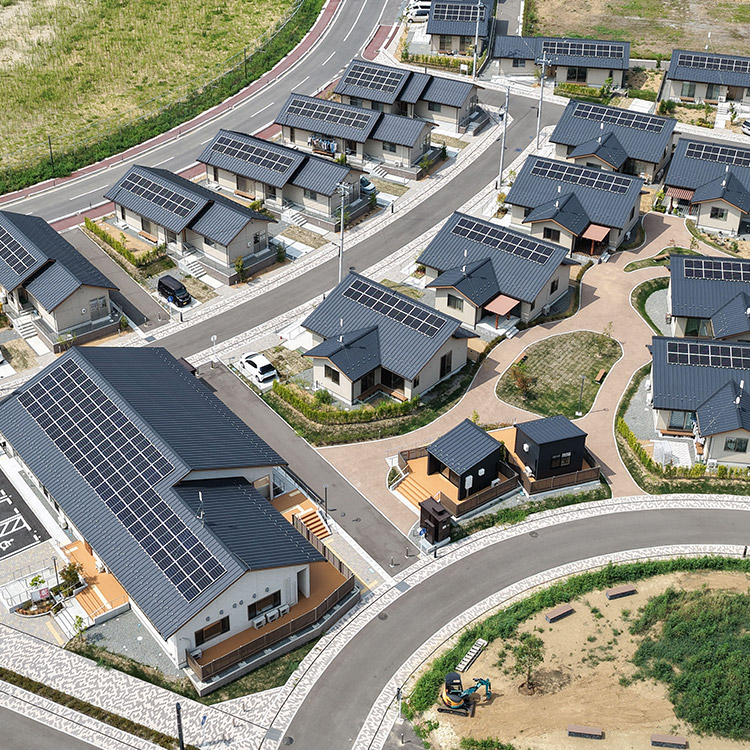
(Great East Japan Earthquake: “Hara Renovated Rental Housing” in Okuma, Futaba-gun, Fukushima Prefecture)
  • Site area:6,882.13m2
  • Total floor area:2,176.10m2

Issues

  • The nuclear accident following the earthquake forced a total evacuation of the town’s residents. The challenge was to revitalize the town by developing new housing to encourage the return of disaster victims and the settlement of younger generations.
  • There was emphasis placed on implementing the cutting-edge initiatives of introducing ZEH and ZEB in post-disaster public housing as well, based on the administrative policies of focusing on environmental considerations and energy self-sufficiency.

Solutions

  • We constructed 20 single-story wooden homes using the high-insulation housing product xevoGranWood. All units were fully electrified by equipping with solar power generation systems and storage batteries, and built to ZEH specifications.
  • We also employed xevoGranWood in the meeting space, just as used in the housing, to achieve ZEB specifications. It also serves as a venue for exchange between residents and people of the nearby neighborhood, and can be utilized as an evacuation space in times of emergencies.

Taking up the challenge of new technologies

Daiwa House Industry TOP